Fingerprinting is the process of generating an identifier for a specific payment method, without revealing any sensitive information. Contrary to payment method tokens, fingerprints cannot be used to make payments, which makes them a secure representation of payment method details.Fingerprints are extremely valuable to:
Check whether a particular card is used by multiple customers, which can be an indicator of fraud
Track if a user is using the same card for multiple customer-present payments, which is a signal that a vault could greatly improve the user experience
Save the preferred card of a customer
A payment method token is not a valid fingerprint since tokenizing or vaulting the same card multiple times yields different payment method tokens.
analyticsId is unique per Primer account. Tokenizing the same card on multiple Primer accounts will generate different analyticsId
When Universal Checkout tokenizes the same payment method multiple times, a new single-used payment method token is generated each time, even if the payment method is part of your unified vault. On the other hands, the analyticsId attached to the payment method token remains the same.As a result, we recommend storing the analyticsId when you want to save the preferred vaulted payment method.
Although analyticsId is available for every payment method, its value heavily relies on how it is generated.Check the following table to better understand how we create an analyticsId for each payment method:
Payment Instrument Type
Analytics ID is created from…
Card
Primer Account ID
Card number
Expiry date
Google Pay
Primer Account ID
Card DPAN
Expiry date
Apple Pay Agnostic processor
Primer Account ID
Card DPAN
Expiry date
Apple Pay Tied to a processor
Primer Account ID
Apple Pay encrypted token (unique per payment attempt)
PayPal Order (Single payment)
Primer Account ID
PayPal Order ID (unique per payment attempt)
PayPal Billing Agreement (Recurring payments)
Primer Account ID
PayPal Billing Agreement ID (unique per agreement)
Klarna Single payment
Primer Account ID
Klarna authorization token (unique per payment attempt)
Example: Blocking payments coming from a specific card
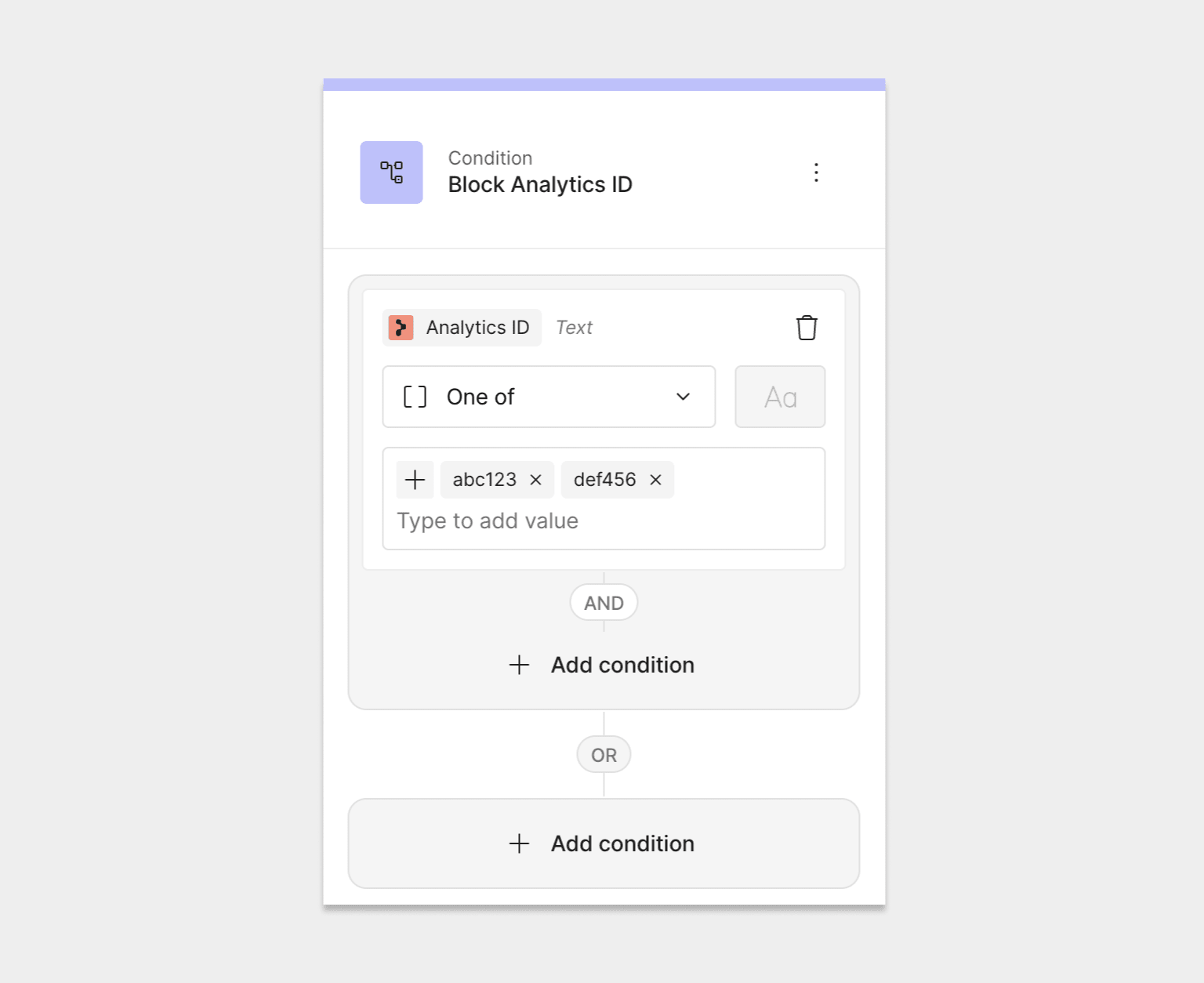
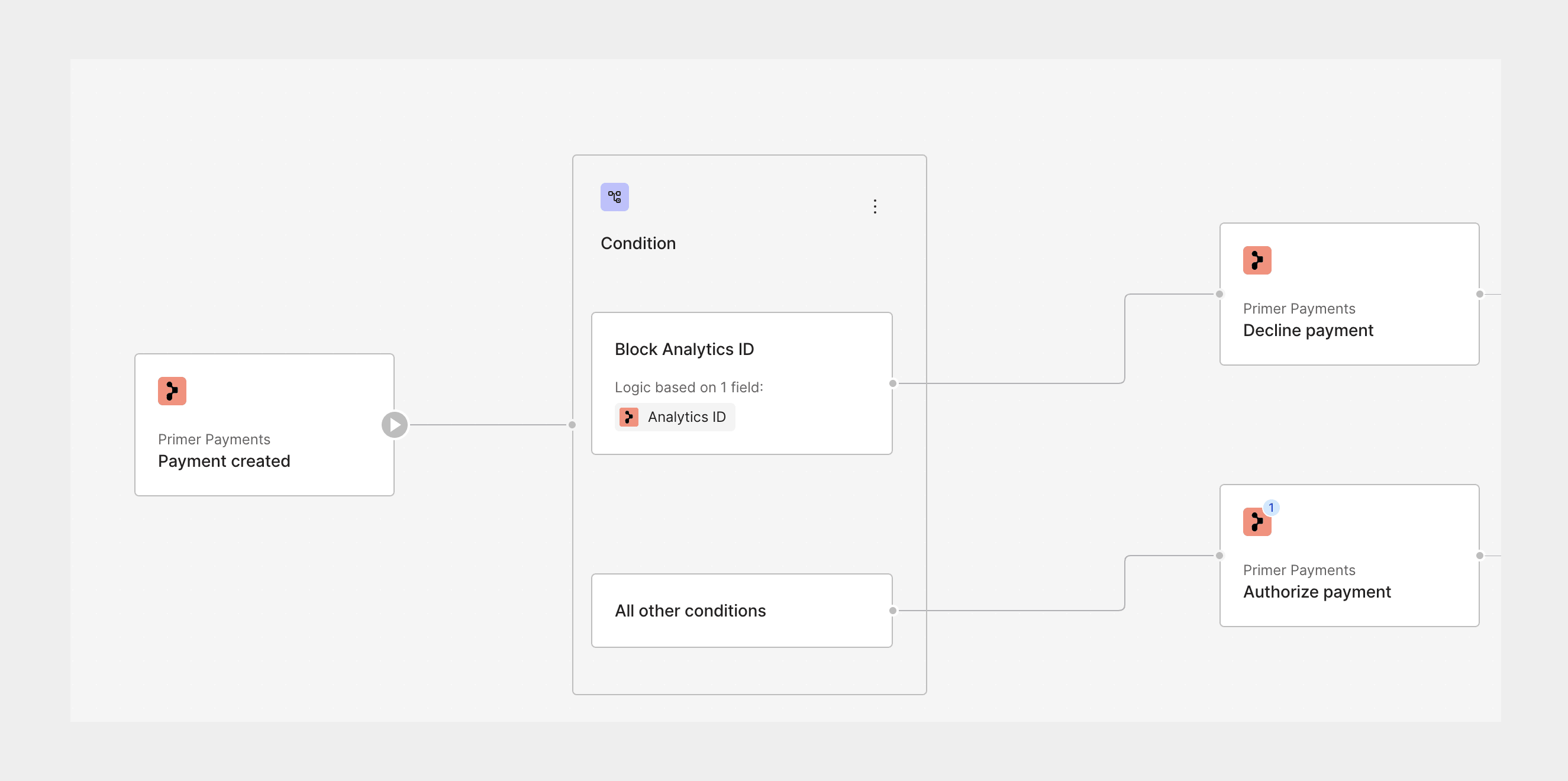
Let’s imagine you have identified a very specific card that you want to block from making any additional payments.First, retrieve the analyticsId you want to block from the payment object.Then, head to your card-processing workflow and add a route with a condition that checks if the Analytics ID of the payment matches the analyticsId you want to block.
Conditions with analyticsId
Finally, add a “Decline payment” action to this specific route so that payments with this analyticsId are automatically blocked.
Workflow
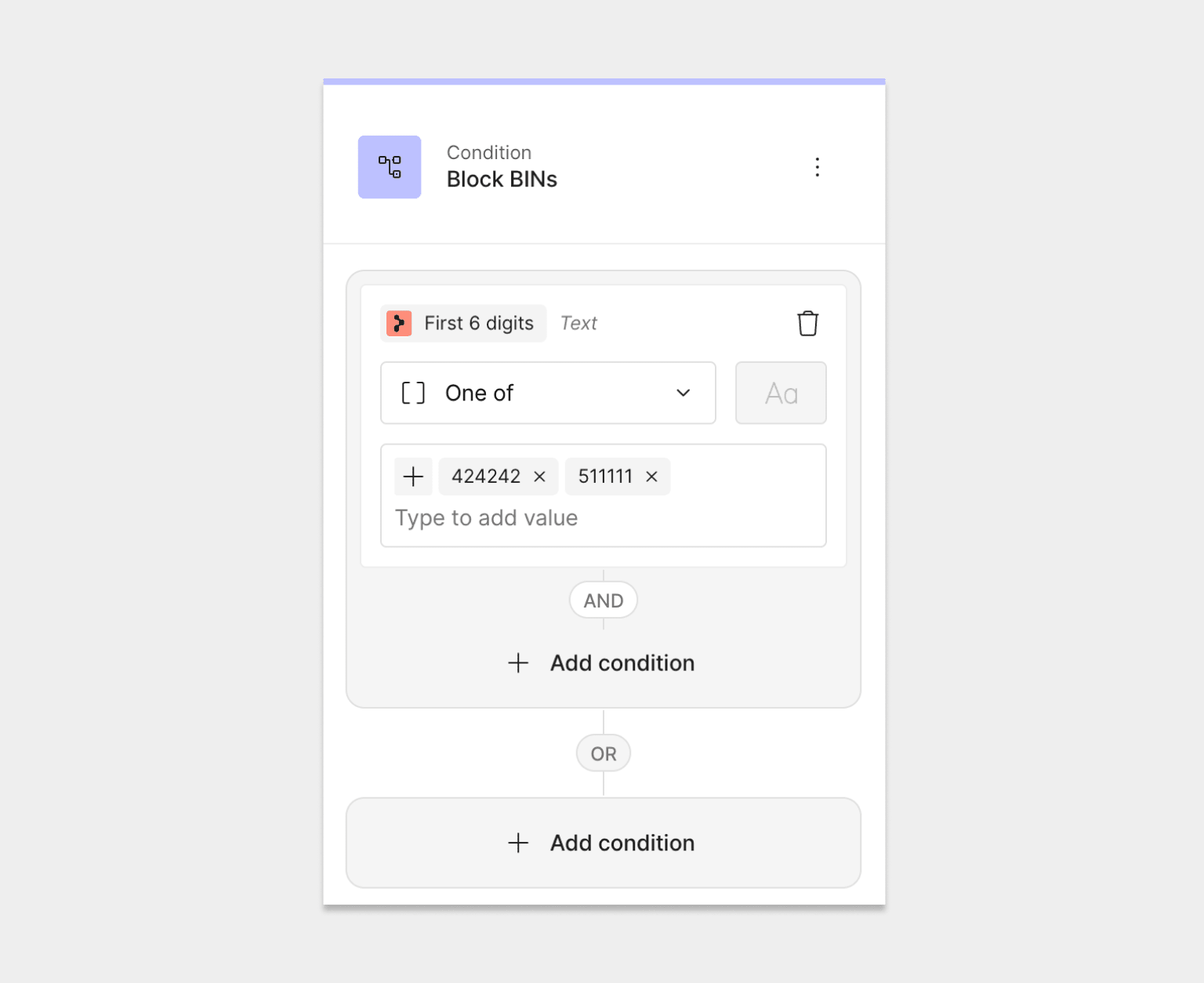
If you want to block an entire BIN, you can instead create a condition that checks the first 6 digits of the card.
Conditions with BIN
Assistant
Responses are generated using AI and may contain mistakes.